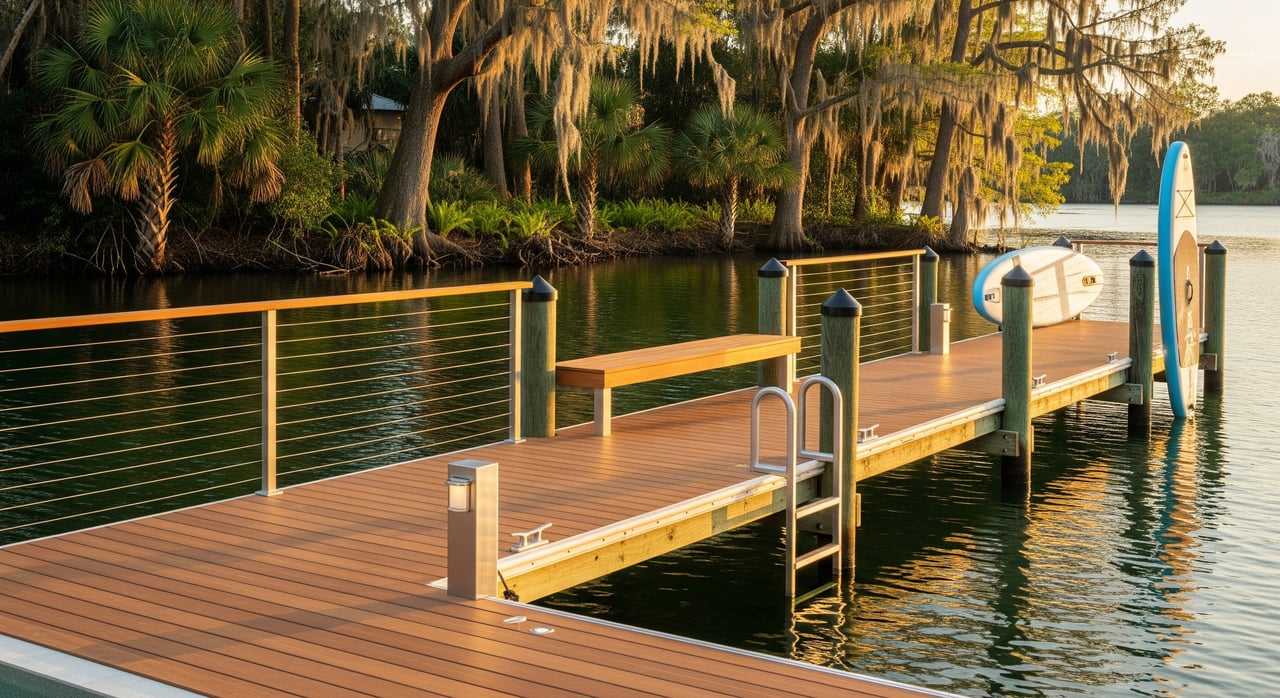
Thinking about stepping off your backyard and onto your own dock on the Rainbow? You are not alone. The Rainbow River is stunning, but it also carries extra protections that change how you design, permit, and build. In this guide, you will learn the size limits, setbacks, permits, and contacts you need to move forward with confidence. Let’s dive in.
Why Rainbow River rules are different
Rainbow River is both an Aquatic Preserve and an Outstanding Florida Water. That means stricter standards to keep the river “essentially natural,” with closer review of dock placement and size. You can expect more coordination with state agencies and added conservation safeguards. Learn more on the state’s page for the Rainbow Springs Aquatic Preserve.
Key takeaway: Rainbow’s special status brings tighter limits and extra steps. Plan for a careful review.
What size dock can you build?
Under Florida law, some small single-family docks can qualify for a state exemption. On Outstanding Florida Waters like the Rainbow, the exemption applies only if the total over-water surface area is 500 square feet or less. Docks must be pile supported, noncommercial, and cannot block navigation. Read the criteria in Florida Statute 403.813.
On the Rainbow River, you often still need authorization from the Florida Department of Environmental Protection (DEP) and the Board of Trustees for use of state-owned submerged lands. This is commonly a Letter of Consent. Always confirm with DEP before you assume an exemption will cover your project.
Setbacks that shape your design
State rules set standard dock setbacks from your extended side property lines. The typical riparian setback is 25 feet. For marginal docks that run along a seawall or bulkhead, the minimum setback is 10 feet. See the Board of Trustees criteria in Rule 18-21.004, F.A.C..
Parcels with less than 65 feet of shoreline may have different options. In some cases, a recorded letter of concurrence from your neighbor can allow an exception to standard setbacks. Always get written guidance before you finalize placement.
Other common limits to expect
Design elements are often capped to reduce impacts. Single-family access walkways are commonly kept narrow, and terminal platforms are often limited in area. Length is usually guided by reaching a practical depth for mooring or a percentage of the river’s width. Aquatic preserve policies can be stricter than general rules, so check the preserve-specific standards in Aquatic Preserve rules.
Key takeaway: On Rainbow, smaller and simpler is more likely to be approved.
Permits and who to contact
You will likely coordinate with several agencies. Here is the short list for Dunnellon:
- City of Dunnellon Community Development: local building permit intake and inspections for docks and boat lifts inside city limits. Start here for submittal checklists and local steps. Visit the City’s building permits page.
- Florida DEP and Board of Trustees: regulates work on state-owned submerged lands and handles Environmental Resource Permits, self-certifications, and Letters of Consent. See DEP’s Submerged Lands and Environmental Resource Coordination program.
- St. Johns River Water Management District (SJRWMD): issues ERPs in Marion County when delegated. Check the SJRWMD Marion County page for contacts and ePermitting.
- U.S. Army Corps of Engineers, Jacksonville District: federal authorization may be required for work in navigable waters. Start with the Corps Regulatory program.
Step-by-step plan for Dunnellon homeowners
Confirm where your property sits. If you are inside the City of Dunnellon, the City issues the building permit. City approval does not replace state or federal authorizations.
Get your site facts. Measure shoreline length and gather a recent survey showing property lines and the water line. Parcels with less than 65 feet of shoreline may have special setback options.
Check if you qualify for DEP self-certification. On the Rainbow, the 500 square foot cap for single-family exemptions applies. Even if you qualify, you may still need a Letter of Consent. Start with DEP’s ERP e-permitting portal.
Request pre-application guidance. Contact the City, DEP’s Aquatic Preserve manager for Rainbow, SJRWMD, and the Jacksonville Corps to confirm what they will require. Early coordination avoids redesign later.
Prepare complete plans. Include scaled drawings with dimensions, a survey showing riparian lines, photos, depth at the mooring point, and material details. Be ready to show that you avoid submerged vegetation and do not block navigation.
Talk to your neighbors. If a setback exception is needed, a recorded letter of concurrence may be required. Agencies also often notify adjacent owners during review.
Build in time for reviews. Plan for completeness checks, potential requests for more information, and coordination among agencies. Adjust your schedule for any revisions.
Construct and close out properly. Follow permit conditions, schedule inspections, and record any required consents or easements. Unpermitted work risks fines and removal.
Key takeaway: A short pre-application call with each agency can save weeks of redesign.
Common pitfalls to avoid
- Assuming a City building permit is the only approval you need. You must also satisfy state and possibly federal requirements.
- Exceeding the OFW exemption cap. Keep total over-water area at or below 500 square feet if you hope to use the exemption under 403.813.
- Planning dredging or fill for access. Exempt docks must be pile supported. Dredging is difficult to permit within aquatic preserves.
- Overlooking riparian rights and navigation. Do not extend beyond side lines or create hazards. Neighbor coordination can help.
- Ignoring resource or cultural protections. The Rainbow has sensitive habitats and archaeological history, which can trigger added review.
- Forgetting local boating rules. Speed zones and container restrictions affect how you use the dock once built. See the Aquatic Preserve page for context.
Timeline and fees at a glance
- DEP self-certification for qualifying single-family docks is online and free. If your plans are complete and straightforward, this can move quickly.
- Environmental Resource Permit reviews often include an initial completeness check of about 30 days. Many actions target about 60 days after the application is declared complete.
- U.S. Army Corps nationwide permit verifications for simple projects often take 45 to 60 days. Individual permits take longer.
Quick checklist before you design
- Confirm you are within City of Dunnellon limits and call Community Development.
- Pull a recent survey and measure your shoreline.
- Sketch a dock under 500 square feet over water if you want to pursue the exemption.
- Keep at least 25 feet from your extended side property lines, or plan for neighbor concurrence if needed.
- Contact DEP’s Aquatic Preserve manager, SJRWMD, and the Jacksonville Corps before finalizing plans.
- Prepare scaled drawings, depth info, and photos for your application.
If you are buying or selling on the Rainbow, you want a plan that respects the river and protects your timeline. For friendly, local guidance on waterfront considerations during a purchase or sale, reach out to Jess Stone.
FAQs
Do I always need state approval for a small single-family dock on Rainbow River?
- Even if your dock meets the statutory exemption, DEP and the Board of Trustees often require a Letter of Consent because the Rainbow is an Aquatic Preserve.
What is the standard side setback for docks?
- State rules typically require 25 feet from your extended side property lines, with a 10-foot minimum for marginal docks along a seawall.
Can I dredge to reach deeper water?
- Dredging is generally not allowed for exempt docks and is difficult to permit in an aquatic preserve.
How big can my dock be if I want to use the exemption?
- On the Rainbow, your total over-water surface area must be 500 square feet or less for the single-family exemption to apply.
Who should I call first?
- Start with the City of Dunnellon Community Development for local permits, then contact DEP, SJRWMD, and the U.S. Army Corps to confirm other requirements.