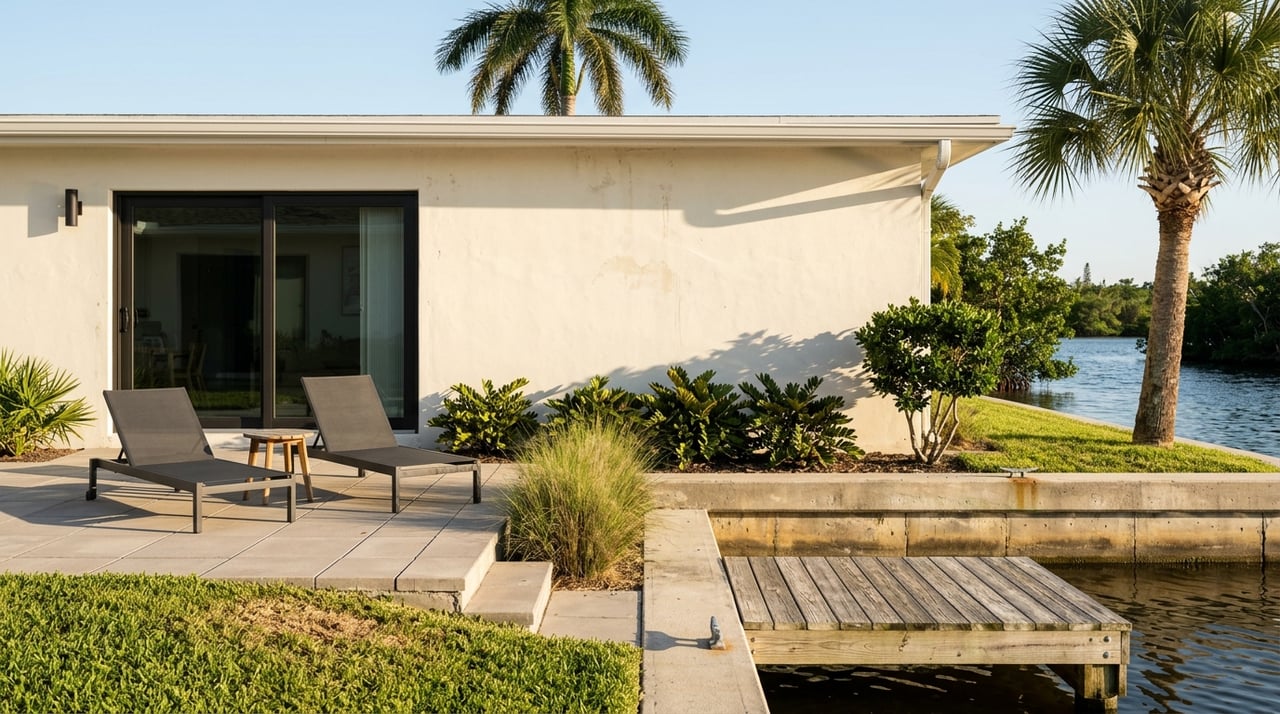
Dreaming about a home near the water in Homosassa Springs? It is easy to picture the view, the boat days, and the wildlife right outside your door. But in this part of Citrus County, buying near the water is not just about scenery. You also need to understand access, flood risk, insurance, and shoreline upkeep so you can make a smart move with confidence. Let’s dive in.
Why water shapes Homosassa Springs
Homosassa Springs is closely tied to the Homosassa main spring and the Homosassa River. According to Florida State Parks, the main spring is a first-magnitude spring that discharges about 65 million gallons of water a day and forms the head of the river, which flows about 8 miles west to the Gulf.
That means the water here is not just a backdrop. It is part of a bigger natural system that affects daily life, boating conditions, wildlife, and even property decisions. The springshed covers about 270 square miles across Citrus and Hernando counties, so what happens beyond your lot can still affect water quality and water levels.
If you are buying for the lifestyle, that appeal is real. You may be drawn to river access, nature, and the chance to enjoy a living freshwater and saltwater environment. At the same time, local conditions can change seasonally, and not every property offers the same kind of access or use.
Know what waterfront really means
Not all homes near the water offer the same experience. Some properties may have a view, some may have canal access, and some may have existing docks or lift setups. Two homes that look similar online can feel very different once you start asking practical questions.
A big one is whether the property gives you the kind of water access you actually want. If your goal is boating, a parcel with legal dock access and workable canal depth may fit very differently than a home that simply sits close to the river.
It also helps to separate public water features from private expectations. For example, Florida State Parks notes that the Homosassa Spring inside the park is closed for recreational use, so it should not be treated like a private swimming spot.
Check docks, lifts, and permits early
If boating is part of your dream, start your due diligence early. Citrus County has significant boating infrastructure, with county budget materials showing 15 public boat ramps. That is great for regional access, but it does not guarantee that every waterfront parcel can support the dock, lift, or launch setup you have in mind.
You will want to ask whether any existing dock or lift was legally permitted and whether future changes may need approvals. County permit records show that dock projects can come with conditions, including recorded notices, state and federal approvals, and limits on how far structures may extend over sovereignty lands or across a waterway.
Those records also show that shoreline work may trigger additional reviews. In some cases, erosion inspections may be required before land surface is altered. That is one reason parcel-specific research matters so much in Homosassa Springs.
Questions to ask about water access
- Is there an existing dock, lift, seawall, or shoreline structure?
- Was that structure legally permitted?
- Is the canal or shoreline suitable for the type of boat you own or plan to buy?
- Are there any restrictions on extending, repairing, or replacing waterfront improvements?
- Has erosion, grading, or drainage work been done before?
Understand manatee protection zones
Homosassa Springs is well known for wildlife, especially manatees. That local identity is part of what makes the area special, but it also affects boating and waterfront use.
The Florida Fish and Wildlife Conservation Commission says manatee protection zones are based on manatee use, boating use, and waterway features like depth, width, and visibility. In practical terms, that means a dock or canal may sit in a manatee-sensitive area, which can affect what is allowed and how boating works nearby.
Florida State Parks also notes that boat strikes are among the most common injuries to manatees. So if you are shopping for a home where you can keep a boat, it is wise to understand local waterway rules and the responsibilities that come with them.
Verify flood risk by parcel
One of the biggest mistakes buyers make is assuming flood risk based on a general location. In reality, flood exposure is parcel-specific.
Citrus County GIS maintains flood zone data and includes a Special Flood Hazard Area layer, while FEMA tools are the official source to verify an address or parcel. That means a home near the water may have a different risk profile than another home just down the street.
This is why you should verify the exact parcel before you fall in love with the listing photos. A beautiful waterfront setting can still be a great fit, but you want clear eyes about the flood map, elevation considerations, and what that may mean for monthly costs.
Plan for flood and wind insurance
Insurance is where many waterfront buyers get surprised. FEMA says most homeowners policies do not cover flood damage, and flood insurance is a separate policy. FEMA also notes that NFIP policies usually have a 30-day waiting period before coverage begins.
If the home is in a high-risk flood area and you are using a government-backed mortgage, flood insurance may be required. That can affect both affordability and your closing timeline, so it is smart to get quotes early.
Wind coverage deserves its own review too. The Florida Chief Financial Officer's consumer guidance warns that some homeowners policies do not cover windstorm damage such as hurricanes, and insurers do not accept new applications or requests to increase coverage once a hurricane nears Florida.
If you are considering Citizens, early planning matters even more. Florida consumer guidance says flood insurance may be required for certain Citizens applicants, and Citizens does not offer flood insurance itself. That makes insurance shopping an early-step task, not a last-minute checkbox.
Expect different maintenance needs
Waterfront and water-adjacent homes usually ask more from you than inland homes. That does not mean they are not worth it. It just means you should go in knowing the upkeep can be different.
The UF/IFAS Florida-Friendly Landscaping handbook recommends a 10-foot low-maintenance zone at the water's edge with no mowing, fertilizing, or pesticide use there. It also notes that shoreline vegetation helps reduce runoff and erosion.
That matters in Homosassa Springs because the health of the water system is bigger than one property line. If you buy near the river or connected waterways, you may want a yard plan that is easier to maintain and better suited to the local environment.
Common maintenance realities
- More attention to drainage and runoff
- Possible erosion concerns along the shoreline
- Added wear from moisture and corrosion
- Seasonal landscaping adjustments
- Ongoing evaluation of docks, lifts, seawalls, or rip rap
For planting choices, UF/IFAS also points to salt-tolerant and low-maintenance options that can make waterfront living more manageable.
Why pricing can vary so much
If you have noticed that two similar-sized homes can have very different price tags, you are not imagining it. In Homosassa Springs, water-related features can change value in a big way.
The broader county market still matters. Redfin reported that Citrus County's median sale price was $280,000 in February 2026, with homes averaging 76 days on market. But a home's value near the water may also reflect its view corridor, dock potential, water access, flood exposure, and shoreline condition.
That pattern lines up with broader research too. A Gulf Coast waterfront study found that proximity to bays, streams, and rivers is positively valued, which helps explain why waterfront and water-access homes may price differently from inland comparables.
Smart steps before you offer
Buying near the water can be amazing, but it rewards careful homework. The goal is not to scare you off. The goal is to help you avoid buying with blind spots.
Before you make an offer, focus on a few key checks:
- Verify flood mapping for the exact parcel through FEMA and local GIS tools.
- Request insurance quotes early for flood and wind coverage.
- Review permit history for docks, lifts, shoreline work, and additions.
- Ask about boating practicality based on canal depth, waterway rules, and current access.
- Consider a marine or shoreline inspection for docks, lifts, seawalls, grading, and erosion concerns.
A home near the water in Homosassa Springs can absolutely be the right move if it matches your lifestyle and your risk tolerance. You just want the full map before you choose your next quest.
If you want a local guide who can help you look past the pretty photos and focus on the details that really matter, connect with Jess Stone. She can help you compare properties, ask the right questions, and make a smart move with confidence.
FAQs
What should you check before buying a waterfront home in Homosassa Springs?
- Verify the parcel's flood zone, review dock and shoreline permit history, ask about boating access, and get flood and wind insurance quotes early.
Can you swim in the main Homosassa Spring if you buy nearby?
- No. Florida State Parks says the Homosassa Spring inside the park is closed for recreational use.
Can every waterfront property in Homosassa Springs have a dock or boat lift?
- No. What is allowed depends on the parcel, permit history, shoreline conditions, and any applicable state, federal, or local restrictions.
Do waterfront homes in Homosassa Springs usually need flood insurance?
- Flood insurance depends on the specific parcel and loan type, but FEMA says flood coverage is separate from homeowners insurance and may be required in high-risk flood areas.
Why do similar homes near the water in Homosassa Springs have different prices?
- Price differences often come from water access, views, dock potential, flood exposure, shoreline condition, and other parcel-specific features.